
Table of Contents
- Why Review Conversion Rates at the Point of Sale Matter
- How to Ask for Google Reviews at Checkout Without Being Pushy
- Alternatives to Paper Review Request Cards (and Why They Fall Short)
- How NFC Tap-to-Review Cards Cut Friction at the Counter
- Best Practices for Collecting Customer Feedback at the Point of Sale
- Measuring Review Conversion Rates Without Guessing
- Conclusion: One Small Ask, Repeated Consistently
- Frequently Asked Questions
Last Updated: September 23, 2026
Why Review Conversion Rates at the Point of Sale Matter
Improving review conversion rates at the point of sale is one of the fastest ways a small business can grow its online reputation. A review conversion rate is the share of customers who actually leave a review after you ask them to. Most owners ask. Fewer customers follow through. That gap is where the opportunity lives.
Google's guidance for business owners on replying to reviews
How to Ask for Google Reviews at Checkout Without Being Pushy
The best way to ask for Google reviews at checkout is to make it one small, friendly step inside a routine the customer already knows. You're not selling. You're inviting.
Timing the Ask: When in the Transaction to Speak Up
Ask right after the payment is done and the receipt is in hand. Not before. Not during. That's the moment the customer feels the value of what they just got.
A few timing rules that hold up in practice:
- Wait until the transaction is fully closed
- Speak while the customer is still at the counter
- One ask per visit, never two
- Skip it if the visit went badly
Scripts That Sound Like a Person, Not a Pitch
Keep it short and specific. A common mistake is over-explaining.
Try lines like:
- "If you have ten seconds, a quick Google review really helps us."
- "Glad you liked it. Would you mind leaving a review? The card makes it easy."
- "No pressure at all, but reviews help our small shop a lot."
Alternatives to Paper Review Request Cards (and Why They Fall Short)
Most guides compare review request methods by counting steps. That's useful, but it misses the real reason customers abandon the ask. The behavioral science behind review submission comes down to three triggers: immediacy (how close the request is to the moment of satisfaction), cognitive load (how many decisions the customer has to make), and social proof (whether leaving a review feels normal or awkward).

| Method | Immediacy | Cognitive load | Social proof |
|---|---|---|---|
| Paper card with URL | Low, customer leaves, forgets | High, type a long URL | None |
| Printed QR code | Medium, depends on lighting and focus | Medium, open camera, aim, wait | None |
| Verbal ask only | High at the counter, then fades | Low at first, then high ("what was the name again?") | Depends on staff framing |
| Email or SMS follow-up | Low, hours or days later | Low, but easy to ignore | None |
| NFC tap card | High, tap happens at the counter | Very low, one tap, no typing | Card itself signals "this is normal here" |
Why Paper Cards Lose the Moment
A paper card asks the customer to do work after the emotional peak of the visit has passed. Behavioral research on the "peak-end rule" suggests people remember an experience by its most intense point and its ending, not the middle. If your ask arrives after the ending, you're competing with the customer's next errand, their phone notifications, and the parking lot.
Why QR Codes Underperform in Real Checkout Lines
QR codes work well in good lighting with a steady hand. They struggle in dim bars, crowded counters, and anywhere the customer is holding a bag, a child, or a coffee. A common pattern reported by small-business owners is that QR scans spike when staff actively point at the code and drop sharply when they don't.
The In-Store vs. Online Gap
None of these tools are bad. They just leave more room for the customer to walk away before they finish, and the walk-away rate is what your review conversion rate actually measures.
How NFC Tap-to-Review Cards Cut Friction at the Counter
An NFC tap-to-review card is a physical card that opens your Google review page when a customer holds a compatible phone near it. NFC stands for Near Field Communication. The phone reads a link stored on the card, shows a notification, and the customer taps it.

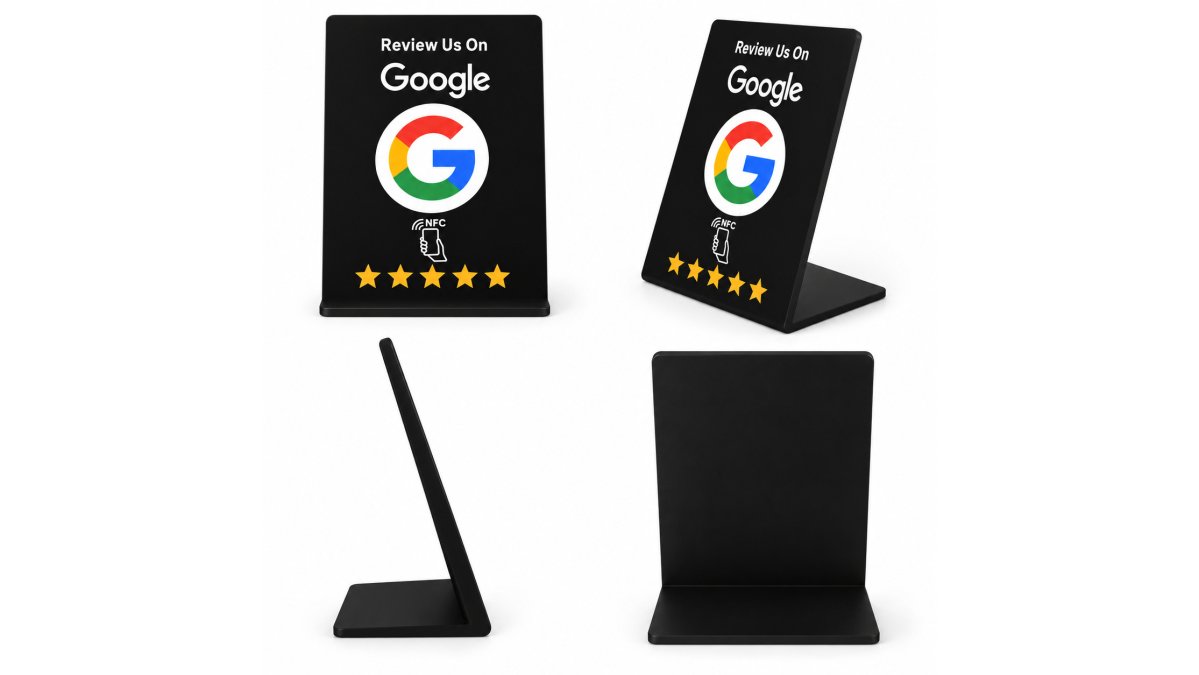
A few things that matter for busy counters:
- No monthly fees or subscriptions
- No separate app for customers to download
- Reusable all day, every day
- Works with compatible NFC-enabled phones
Best Practices for Collecting Customer Feedback at the Point of Sale
Good feedback collection is a habit, not a campaign. The businesses that win at this do the same small things every single day, and they understand the line between encouraging reviews and incentivizing them.
Start with these operational basics:
Tapnivo NFC Google Review Card – Tap →
- Ask every customer, not just the ones who look happy
- Keep the request under ten seconds
- Place the card where the customer's hands already are, next to the card reader, not across the counter
- Give staff one clear line to use, worded the same way every time
- Never offer money, discounts, free items, or entries into a drawing in exchange for a review
The Incentivization Line, and Why It Matters
This is the part most point-of-sale guides skip. The Federal Trade Commission's rules on endorsements and reviews require reviews to reflect real customer experience. Offering a reward for a review, even a small one, can turn an honest review into a paid endorsement in the eyes of regulators, and platforms like Google can filter or remove reviews that appear incentivized.
The safe zone is asking, not paying. You can:
- Ask every customer for an honest review
- Make the ask easy with a tap card
- Thank customers who leave reviews without offering anything in return
You should not:
- Offer a discount, free item, or raffle entry for leaving a review
- Ask only happy customers and screen out the rest
- Write reviews on behalf of customers or dictate what they should say
- Ask staff to leave reviews for the business
Train Staff on One Ask, One Tap
Pick one sentence. Teach it to everyone. Then teach the tap.
A short training routine that works:
- Show the team how the card opens the review page
- Have each person practice the ask out loud until it sounds natural
- Set the rule: one ask, one tap, no follow-up pressure
- Review what's working every couple of weeks
- Rotate who gives the ask so it doesn't always fall on the same person
Close the Loop with Feedback You Don't Publish
Not every customer wants to leave a public review, and that's fine. Some will have a complaint they'd rather tell you directly. Give staff a way to capture that feedback privately, whether it's a short note, a comment card, or a quick conversation logged at the end of the shift.
Make the Ask Part of the Routine, Not a Special Event
The businesses with the highest review conversion rates don't run review campaigns. They build the ask into the checkout script the same way they build in "Would you like a receipt?" It happens every time, it takes seconds, and it stops feeling like a request and starts feeling like part of the service.
Measuring Review Conversion Rates Without Guessing
You can't improve a number you never track. The good news is you don't need fancy software.
Track three simple figures each week:
| Metric | How to track it | Why it matters |
|---|---|---|
| Customers served | Daily count or POS total | Your baseline |
| Reviews received | Google Business Profile | The result |
| Review conversion rate | Reviews ÷ customers | Your real score |
Conclusion: One Small Ask, Repeated Consistently
Most businesses don't have a review problem. They have a follow-through problem. The ask happens, the customer means to do it, and then the moment passes.
Frequently Asked Questions
How does NFC technology improve the review collection process?
NFC lets a customer open your Google review page with one tap instead of typing a link or searching your business name. The phone reads the link stored on the card, shows a notification, and the customer taps it to reach your listing. That removes the biggest drop-off point in the ask: the pause between wanting to leave a review and actually finding the page. A Tapnivo NFC Google Review Card works this way with compatible phones and needs no separate app.
How can I ask for reviews without being pushy at the point of sale?
Keep the ask short, specific, and tied to the moment. A line like "If you enjoyed your visit, a quick Google review helps us a lot" works better than a long explanation. Pair the words with a card or stand already on the counter so the customer does not have to ask how. Never stand over someone while they type, and accept a simple "no" without pushing. The goal is an honest review, not a forced one.
Why are paper review request cards becoming obsolete?
Paper cards ask customers to do the hard part themselves: type a long URL or search for your business among similarly named listings. Many people intend to do it later and never do. Paper also runs out, gets thrown away, and has to be reprinted. A reusable tap-to-review card skips the typing step entirely, so more customers finish the review while the experience is still fresh.
What is a good conversion rate for customer reviews?
There is no universal benchmark, because rates vary by industry, staff consistency, and how busy your counter gets. The practical approach is to track your own numbers: count transactions in a week, then count new Google reviews in that same week. That ratio is your baseline. Small changes, like placing a tap-to-review card where the customer pays, tend to move that number more than any industry average would.