
Table of Contents
- What to Look for in Customer Feedback Tools
- Quick Comparison: 5 Best Customer Feedback Tools for 2026
- 1. Tapnivo: NFC Review Cards for Small Business
- 2. Survey Platforms: Flexible Questionnaires for Deeper Feedback
- 3. Review Management Software: Monitoring and Responding at Scale
- 4. In-App Feedback Widgets: Catching Users at the Moment of Friction
- 5. Social Listening Tools: Finding Unprompted Feedback Online
- Customer Feedback Best Practices That Improve Response Rates
- Frequently Asked Questions
Last Updated: September 21, 2026
What to Look for in Customer Feedback Tools
The best customer feedback tools share one trait: they collect responses where customers already are, not where it's convenient for the business. A short survey at the register beats a long email sent three days later. That principle should guide every buying decision you make.
At Tapnivo, we build simple tap-to-review cards for local businesses, so we spend a lot of time thinking about what actually gets people to respond. Here's what separates tools that work from tools that sit unused.

Response friction is the first thing to evaluate. Every extra step between a happy customer and a submitted response cuts your completion rate. Tools that open in one tap or one click consistently outperform those requiring logins or app downloads.
Channel fit matters just as much. A restaurant needs feedback collected at the table. A software company needs it inside the product. Match the tool to where your customers physically are when the experience is fresh.
Cost structure deserves scrutiny. Subscription tools charge monthly whether you collect ten responses or ten thousand. One-time purchase options exist for narrow use cases, like review collection.
Reporting should tell you what to fix. Raw response counts mean little without trends over time or sentiment breakdowns.
Quick Comparison: 5 Best Customer Feedback Tools for 2026
Most lists in this space compare five brands and stop there. That's a mistake, because the tool that fits a two-person salon is the wrong tool for a fifty-person software team. The comparison that actually matters is by use case, not brand, and then by the two things every buyer underestimates: setup time and the compliance burden of collecting customer data.
Here's how the five categories stack up on the dimensions that decide whether a tool gets used or abandoned.
| Tool Category | Best For | Cost Model | Time to First Insight | Data Handling Burden |
|---|---|---|---|---|
| NFC review cards (Tapnivo) | Local businesses collecting honest Google reviews | One-time purchase | Minutes | None, no customer data stored |
| Survey platforms | Teams needing custom questionnaires and trend data | Monthly subscription | Hours to days | High, you own the data and the compliance |
| Review management software | Multi-location brands monitoring and responding at scale | Monthly subscription, often per location | Days | Moderate, platform stores review text |
| In-app feedback widgets | Software and app companies catching friction in the moment | Monthly subscription | Days to weeks | High, tied to user accounts and session data |
| Social listening tools | Brands tracking unprompted public mentions | Monthly subscription | Hours to days | Low, you're reading public posts |
How to read this table. Start with the "Best For" column and find the row that describes your business, not the row with the most features. A restaurant owner does not need a survey platform with branching logic; a SaaS product manager does not need a countertop card.

Then check the compliance column. This is the column competitors skip, and it's the one that can cost you real money. Any tool that stores customer responses, names, emails, phone numbers, open text, puts you on the hook for how that data is collected, stored, and deleted. Any tool that stores customer responses, names, emails, phone numbers, open text, puts you on the hook for how that data is collected, stored, and deleted. A survey platform that captures email addresses inherits all of that. A tap-to-review card that simply opens a public review page stores nothing, which is why it's the lowest-burden option on the table.
Then check time to first insight. A tool that takes three weeks to configure is three weeks you're not learning anything. Cards and social listening tools produce signal on day one. Survey platforms and in-app widgets need setup, testing, and a distribution plan before the first response lands.
A quick decision path:
- If your customers interact with you in person and you want more public reviews, start with NFC review cards.
- If you need structured, chartable data across many touchpoints, a survey platform earns its subscription, but budget the setup time.
- If you have multiple locations and reviews are piling up unanswered, review management software pays for itself in response speed.
- If you run a digital product, in-app widgets catch problems surveys never will.
- If you want to know what people say when you're not asking, social listening fills that gap.
1. Tapnivo: NFC Review Cards for Small Business
Tapnivo makes NFC Google review cards that let a customer open your review page with a single tap of a compatible phone. No app download, no typing a URL, no searching for your business name.
The card sits at your checkout counter, reception desk, or in a stylist's pocket. When a customer pays and mentions they loved the service, you hand them the card. They tap. Their phone opens your Google review page. They choose their own rating and write their own words.
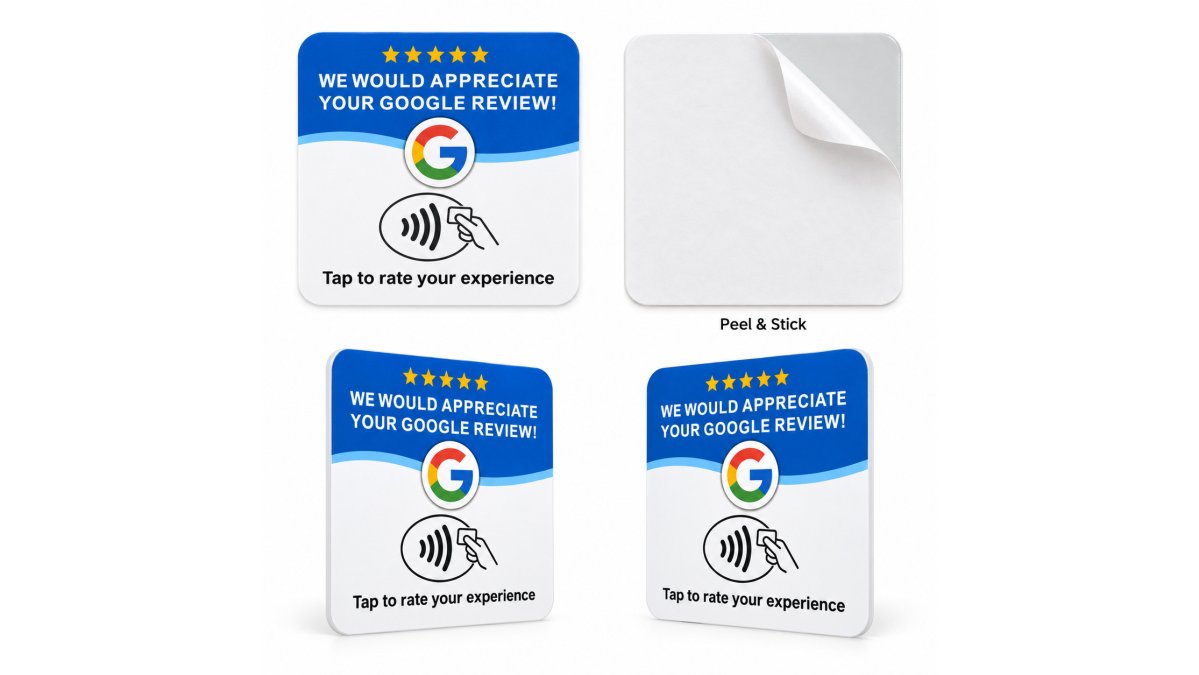
Setup takes three steps: choose your card pack, copy your Google Business Profile link using the Share option on your Maps listing, and paste that link into the required field before adding cards to your bag.
Pricing is a one-time purchase.
You can shop the NFC Google review cards directly, or browse the NFC review stand if you prefer a countertop fixture.
2. Survey Platforms: Flexible Questionnaires for Deeper Feedback
Survey platforms are the workhorse category. They let you build custom questionnaires, branch questions by answer, and distribute across email, SMS, and web.
3. Review Management Software: Monitoring and Responding at Scale
Review management software watches your listings across platforms, alerts you to new reviews, and gives you one dashboard to respond from. For a single-location shop, that's overkill. For a brand with twenty locations, it's essential.
4. In-App Feedback Widgets: Catching Users at the Moment of Friction
In-app widgets embed a feedback prompt directly inside your product. A user hits a confusing screen, taps the widget, and reports the problem without leaving the flow.
5. Social Listening Tools: Finding Unprompted Feedback Online
Social listening tools scan public posts and mentions for your brand name. The feedback you find there is unprompted, which makes it honest but messy.
Customer Feedback Best Practices That Improve Response Rates
A note on justifying the spend. If you're pitching a feedback tool to a stakeholder, frame it in terms of the cost of not hearing from customers: unanswered complaints that become churn, and missed patterns that become roadmap mistakes. You don't need a precise ROI figure to make that case, you need one concrete example of a problem you'd have caught earlier with a working feedback loop. For survey design fundamentals that make your questions count, Pew Research's methodology guides cover question wording in useful detail.
Frequently Asked Questions
What are the best tools for collecting customer feedback?
The best customer feedback tools depend on your goal. For local businesses wanting more Google reviews, NFC review cards like Tapnivo let customers tap their phone to open your review page. For deeper research, survey platforms work well. Review management software helps you monitor and respond to feedback across sites. In-app widgets capture feedback inside digital products, and social listening tools track unprompted mentions. Most small businesses combine two or three of these to cover different moments in the customer journey.
How can NFC technology improve customer review collection?
NFC review cards remove the biggest barrier to leaving a review: finding your business online. A customer taps their compatible phone on the card, and your Google review page opens right away. There is no app to download and no link to type. Because the process takes seconds, customers are more likely to leave feedback while the experience is still fresh. The card does not guarantee a review or a particular rating, and customers choose their own rating and submit it themselves.
How much do customer feedback tools cost in 2026?
Pricing varies by category. Tapnivo NFC review cards start at $25 for a single card, with larger packs lowering the price per card to $20 each on the 20-card pack. It is a one-time purchase with no monthly fees. Survey platforms and review management software typically charge recurring monthly subscriptions based on features and response volume. Social listening tools often price by mentions tracked. For a small business, a one-time NFC card purchase plus a free survey tool can cover most feedback needs at low cost.
What is the best way to collect customer feedback at a physical location?
Ask at the moment of service, when the experience is still fresh. Keep a tap-to-review card or stand at your checkout counter, front desk, or table. A simple script like 'If you enjoyed today, a quick Google review helps us a lot' works better than a generic request. Pair the ask with a fast tool so the customer can act immediately. Businesses that make leaving feedback a two-second action tend to see more responses than those relying on emailed links sent days later.
Getting more honest feedback comes down to removing friction at the moment your customer is happiest. Tapnivo makes that simple with NFC Google review cards that open your review page in one tap, require no app download, and carry no monthly fees. Choose your card pack, paste your Google Business Profile link, and place a card at your counter where customers already stop. Get started with Tapnivo and give every customer an easy way to share their experience.